













With urban growth and increased mobility, technology is at the heart of urban transformation.
Smart public parking has become an essential component for more efficient space management and enhancing user experience, while driving environmental sustainability.
This article explores in depth the development, operation, and challenges of these cutting-edge infrastructures, highlighting their relevance in integrating modern urban systems.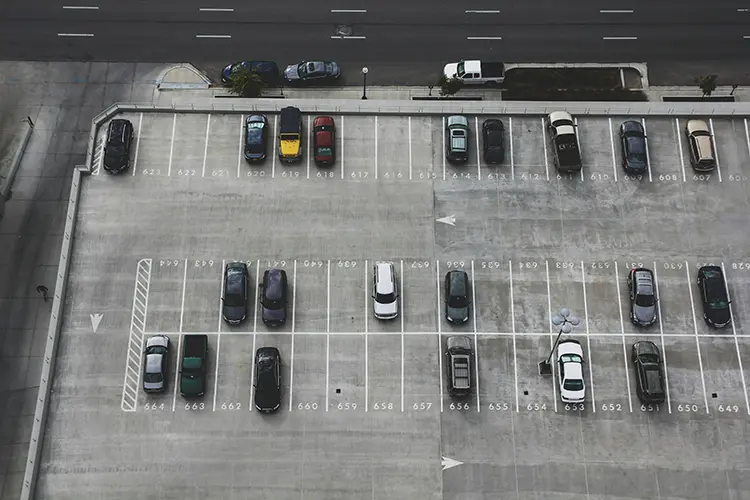
Technological integration and data management
The concept of smart public parking goes far beyond mere automation in space management. It is an ecosystem where IoT sensors, video surveillance cameras, license plate recognition systems, and real-time data communication networks converge. These devices collect and process information on occupancy, vehicle flow, and environmental conditions, enabling proactive and dynamic management.
The technology behind these systems relies on big data analysis and artificial intelligence algorithms that optimize space allocation and predict demand. In this way, real-time decisions can be made to reduce the time spent searching for parking, decrease traffic congestion, and consequently lower cities’ carbon footprint.
Operational and economic benefits
The implementation of smart parking offers a range of operational and economic advantages for both municipal administrations and users. Key benefits include:
- Optimized urban space: With precise data on parking occupancy, cities can manage available spaces more efficiently, maximizing urban space usage and minimizing congestion caused by searching for parking.
- Reduction of pollutant emissions: The decrease in time spent searching for parking significantly reduces CO₂ emissions, improving air quality in urban areas.
- Improved safety: The use of cameras and sensors not only enables efficient parking control but also enhances safety by monitoring in real time for potential incidents or suspicious activities, protecting both users and infrastructure.
- Maintenance efficiency: Constant monitoring of equipment and infrastructure allows for predictive maintenance, preventing failures before they become major issues, reducing operating costs, and extending system lifespan.
- Multiservice integration: Smart parking integrates synergistically with other urban management systems, such as public transportation and shared mobility platforms, creating a cohesive ecosystem that enhances user experience and optimizes municipal resources.
 |
 |
Innovation and technical challenges
The integration of cutting-edge technologies in public parking presents challenges that require close coordination among various fields—from telecommunications engineering to cybersecurity and data management. One of the most significant challenges is the interoperability among different systems and devices, as they often come from providers with varying technological standards. Adopting open protocols and regulatory frameworks becomes essential to ensure these systems can communicate seamlessly.
Another critical aspect is the protection of privacy and data security. The interconnection of networked devices can be vulnerable to cyberattacks if robust security measures are not implemented. Therefore, authorities and developers must work together to create policies and regulations that protect citizens' sensitive information without hindering technological innovation.
Furthermore, the initial investment for implementing these infrastructures can be high, posing a challenge for many municipalities. However, recent studies show that the long-term benefits, both in operational efficiency and improved urban quality of life, far justify the initial cost. Public-private collaboration and innovative financing models are key to overcoming these economic obstacles.
Success stories and future perspectives
Several cities around the world have begun incorporating smart parking with promising results. In some cases, urban traffic has been reduced by 20% and the time spent searching for parking has notably decreased. These outcomes demonstrate the potential of smart technologies to transform public space management and contribute to more sustainable urban mobility.
 |
 |
The evolution of technology and the integration of advanced systems suggest that in the future we will see a greater adoption of these solutions. The convergence of technologies such as artificial intelligence, the Internet of Things, and real-time data analytics will continue to drive innovation in this field. The expansion of 5G networks is expected to facilitate communication between devices, improving the accuracy and speed of parking management systems.
Additionally, the incorporation of shared mobility solutions and autonomous vehicles will open new opportunities for integrating smart parking into an interconnected transportation network. This ecosystem will enable more holistic mobility management, encompassing everything from urban planning to the daily experience of citizens.
Conclusion
Smart public parking represents a successful convergence of technology, innovation, and urban planning. Its implementation not only improves the efficiency and safety of space management but also promotes sustainability and reduces pollutant emissions in cities. Although technical and economic challenges remain, the trend towards digitalizing urban infrastructures is undeniable and promises to radically transform our approach to mobility.
In an environment where urban space is increasingly under pressure, these solutions are positioned as a fundamental pillar for the development of smart cities. The key to the success of these projects lies in the collaboration between the public and private sectors, the adoption of updated regulations, and the investment in emerging technologies. With the commitment of all involved, smart public parking will become an indispensable element in building efficient, safe, and sustainable urban environments, paving the way for a more integrated and environmentally friendly future.
This vision for the future not only invites us to rethink mobility management but also opens the door to a comprehensive transformation of cities, where technology serves as an enabler of a higher quality of life for all residents.