







Printed signage has an expiration date thanks to ePaper and the rise of sustainable digital signage.
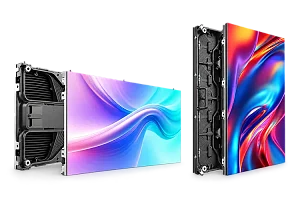
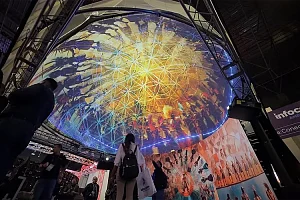
For years, much of the evolution of digital signage was associated with a relatively predictable idea: more brightness, higher resolution and greater visual impact. The development of LED, MicroLED and large-format videowalls reinforced this logic, turning visual spectacle into one of the main drivers of the AV sector. However, one of the most interesting trends that became evident during DSS Europe Munich 2026 pointed in precisely the opposite direction.
While technologies such as MicroLED seek to maximise impact and immersive experiences, ePaper pursues almost the opposite: minimal power consumption, reduced maintenance, remote updates and the gradual replacement of printed signage.
The issue is relevant because the market is beginning to recognise that a significant share of the screens currently installed across retail, corporate and hospitality environments never really required video capabilities, high brightness or motion graphics. What they needed was something much simpler: the ability to display static or semi-static information in a flexible, centralised and energy-efficient way. This is where ePaper is beginning to move beyond being a technological curiosity and is becoming a new category within professional signage.
The rise of ePaper is more about operations than displays
The expansion of ePaper is driven less by aesthetics than by a combination of operational pressures, sustainability goals and energy costs.
Rising energy prices, ESG policies, the need to reduce printed materials and increasing pressure to improve operational efficiency are pushing retailers and large corporations to rethink certain layers of visual communication.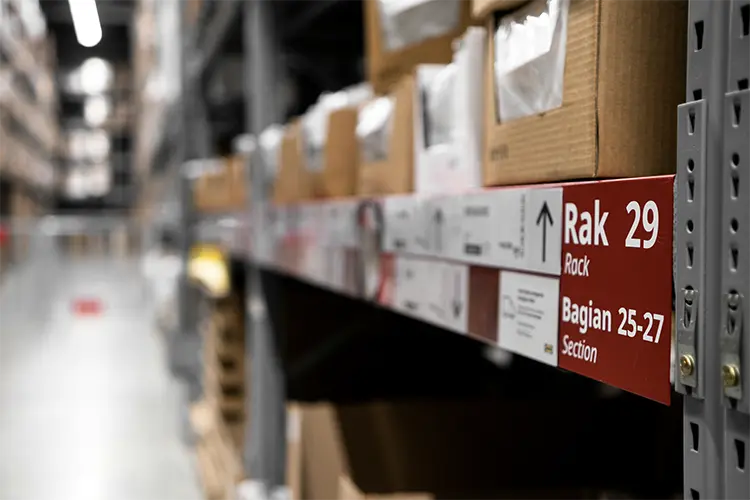 Unlike LCD or LED displays, ePaper screens only consume power when content is updated. Once an image is displayed, the screen can maintain it without constant power, dramatically reducing energy consumption and maintenance requirements compared with other signage technologies.
This completely changes the conversation. The discussion no longer revolves around brightness, contrast or visual impact, but around TCO, multi-site operations, remote updates, product lifespan and waste reduction.
Digital signage is therefore becoming part of broader corporate discussions around operational efficiency and sustainability.
Samsung, Sharp, DynaScan and AUO: ePaper moves into real-world deployments
The most important shift is the evolution of ePaper from an experimental concept into a professional infrastructure integrated within CMS ecosystems and remote management platforms.
Samsung is reinforcing this direction through Color E-Paper integrated with its VXT CMS platform. The move is strategic because it reflects how ePaper is becoming part of centralised management architectures aimed at retail and corporate communications. The focus is no longer solely on the display itself, but on remote deployment, automation and large-scale content updates across distributed networks.
At the same time, Sharp is directing part of its strategy towards low-maintenance autonomous deployments, one of the areas where ePaper is becoming particularly competitive against printed signage and LCD screens used for static messaging.
Manufacturers such as DynaScan are also strengthening strategies around low-power professional signage designed for static communications and efficient deployments, a category that is gaining traction in retail, hospitality and corporate signage. Another company gaining visibility is AUO Display Plus, particularly through AecoPost and its colour ePaper developments aimed at sustainable retail and corporate signage. Ongoing improvements in colour reproduction and readability are expanding applications beyond the traditional black-and-white ePaper associated with the technology, bringing it closer to professional commercial communication scenarios.
The real battleground: replacing paper, not competing with LED
One of the most common mistakes when analysing ePaper is comparing it directly with high-brightness LED or LCD displays. The market is beginning to understand that ePaper does not compete with videowalls, spectacular DOOH installations or immersive experiences. Instead, it competes with printed signage, posters, vinyl graphics, physical menus and a large portion of LCD screens used for largely static content.
This redefines the competitive landscape. The goal of ePaper is not to attract attention through extreme visual impact, but to digitise communication layers that have historically relied on printed materials. This creates highly specific applications across retail, hospitality, corporate environments and transport: digital menus, price tags, promotions, corporate signage, wayfinding, hospitals, hotels and internal communications.
Across all these scenarios, the appeal of the technology lies in its operational efficiency: lower power consumption, less printing, simplified maintenance and centralised remote updates.
ESL, CMS and signage: the convergence reshaping retail
One of the most significant developments in the market is taking place through the convergence of ESL (Electronic Shelf Labels), CMS platforms and digital signage.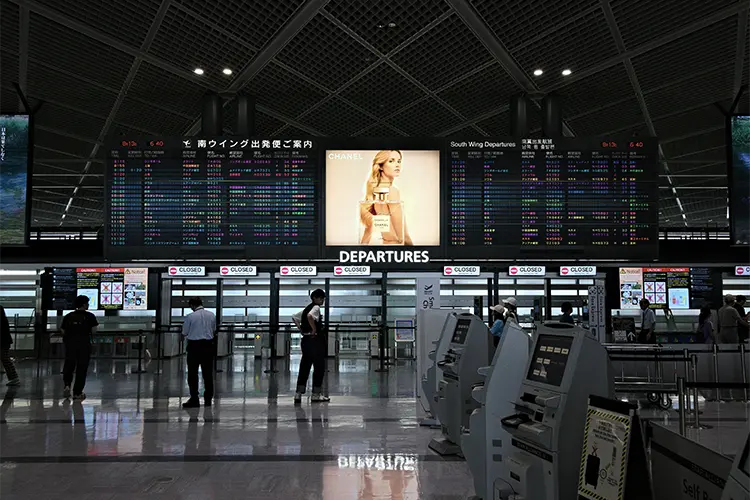 SOLUM has become one of the most active players in this integration between digital pricing, ESL and retail automation. The strategic value of these solutions lies in their ability to connect visual communications, inventory management and commercial operations within a single data architecture. Signage is therefore becoming directly integrated with pricing automation, stock management, promotions and retail media campaigns.
Meanwhile, M-Cube has spent years developing omnichannel retail models where digital signage, customer experience and connected operations form part of a unified ecosystem.
The implications are significant because ePaper is no longer perceived as an isolated technology but is increasingly integrated into broader retail automation and connected communication models.
Software is becoming more important than the screen
The evolution of ePaper is also reinforcing another structural trend within the AV industry: the growing importance of software, interoperability and remote management.
Companies such as signageOS are developing integration layers capable of connecting multiple display technologies within a single centralised operation.
The challenge is no longer simply displaying content, but managing distributed networks of ultra-low-power devices with remote monitoring, automation and multi-location control.
Along the same lines, Dimedis continues to strengthen centralised management platforms where differentiation depends less on hardware and more on the ability to manage complex deployments efficiently.
Digital signage is therefore shifting away from a screen-centric approach towards one based on connected and manageable communications.
Green signage does not eliminate technical limitations
Even so, ePaper still faces significant limitations. It is not designed for video, complex motion graphics or high-impact visual applications. Current constraints remain linked to refresh rates, colour depth, brightness, upfront costs and the type of content supported. For that reason, ePaper occupies its own space within the professional AV ecosystem, addressing needs that differ from those served by traditional digital signage.
A new argument for AV integrators
For AV integrators and solution providers, the appeal of ePaper is closely tied to operational consulting and TCO. The conversation is shifting away from the initial cost of the display towards variables such as energy consumption, maintenance, avoided printing, waste reduction, product lifespan and remote operations. This is particularly relevant for distributed retail projects and corporate signage deployments, where operational savings may ultimately prove more important than visual impact.
AV integrators are evolving towards a role that is increasingly aligned with technology consulting, combining operational efficiency, sustainability and visual environment management.
In this context, the integration of ePaper, CMS platforms, automation, ESG criteria and remote management is creating new opportunities across retail, corporate communications, hospitality and public spaces.
And that is probably one of the most interesting conclusions to emerge from DSS Europe Munich 2026: digital signage is evolving from a simple display category into a connected, measurable and manageable communication infrastructure that is becoming increasingly integrated with data, automation, retail media and sustainability.