










Interview. AI, retail media and service models will shape the evolution of digital signage over the coming years.
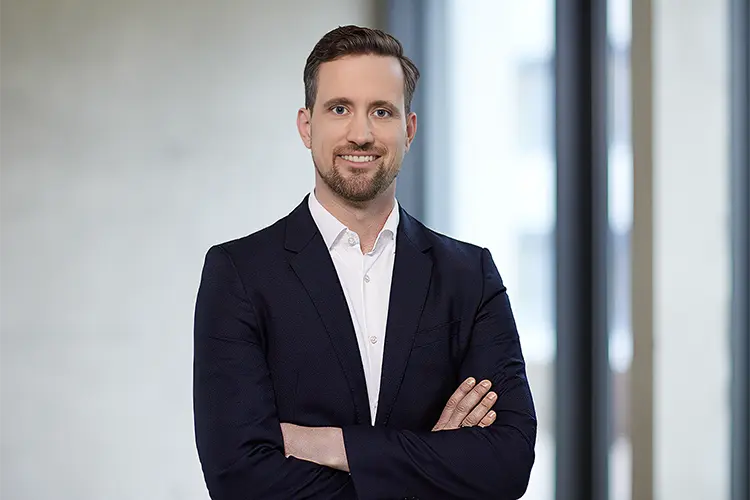
Following his participation at DSS Europe 2026, Lutz Hollmann-Raabe, CEO of Bütema AG, discusses the challenges and opportunities redefining the digital signage sector, from technology integration to the evolution of in-store experiences.
The industry is talking extensively about AI, retail media and personalization. Which technologies do you believe will generate sustainable business opportunities in digital signage over the next three years, and which ones do you think are still overrated?
AI and Retail Media will be the main drivers of sustainable business opportunities in digital signage over the next three years. AI enables automation, smarter content optimization and greater operational efficiency, especially in areas such as content management, campaign optimization and audience analytics. Meanwhile, Retail Media is unlocking new revenue streams by turning in-store screens into monetizable advertising channels.
By contrast, personalization is currently somewhat overrated within the context of digital signage. Most digital signage environments operate under a “one-to-many” model, where truly personalized communication at an individual level is inherently limited. In reality, what we see is not one-to-one personalization, but rather group-based targeting: tailoring content to broader audience segments or shared characteristics.
This means personalization will always involve finding the common denominator within a group, rather than delivering highly individualized messaging. As a result, its impact is often overestimated compared to the more immediate and scalable opportunities offered by AI and retail media.
The digital signage market is entering a phase of consolidation and growing competitive pressure. How is your company’s strategy evolving to differentiate beyond hardware or CMS platforms?
We are not only observing market consolidation — we are actively part of it. Last year, we acquired WEDEKO, a company with approximately €3 million in revenue, and we continue to evaluate new strategic acquisitions for the coming year in order to strengthen our position.
Beyond consolidation, our differentiation strategy is very clear. We deliberately move beyond discussions focused purely on hardware or CMS platforms and position ourselves as a comprehensive end-to-end partner. Our approach covers the entire value chain: from software and hardware to managed services.
A key differentiator is our 360-degree business model combined with a strong service-oriented approach. In particular, we are one of the few providers in Europe offering a scalable Hardware-as-a-Service (HaaS) model, backed by a reliable 48-hour on-site SLA. This provides customers not only with technological flexibility, but also operational security and predictable costs.
In an increasingly competitive market, we believe that innovation in business models and service excellence — not just technology — will define long-term success.
The industry increasingly demands integration between AV, IT, data and analytics. Do you believe the integration channel is prepared for this new environment, or is there still a significant technology gap?
I can speak about our own organization, and in this regard, I would say we are quite advanced. We have built deep integration between AV, IT, data and analytics, with data being a central part of our strategy for many years.
However, the real issue is not so much technological capability as actual customer usage. In many cases, the infrastructure and data are available, but they are not fully leveraged. Although integration is technically feasible and increasingly common, the level of maturity in data-driven decision-making still varies significantly among customers.
Therefore, I no longer see a fundamental technology gap. The greater challenge lies in adoption, mindset and the ability to transform data into actionable business value.
Sustainability is no longer limited to energy consumption. How does it influence your decisions regarding product design, manufacturing, maintenance and the lifecycle of installations?
Sustainability has become a core design principle throughout the entire lifecycle, not just a matter of energy efficiency.
In terms of product design and manufacturing, we focus on modular and durable systems that can be upgraded rather than replaced. This reduces resource consumption and extends lifecycle value. Standardization plays a key role, enabling components to be reused and maintained more efficiently.
Operationally, our strong service orientation directly contributes to sustainability. With concepts such as Hardware-as-a-Service, we assume full responsibility for the lifecycle: from deployment and maintenance to refurbishment and reuse. Our 48-hour on-site SLA ensures that systems are repaired instead of replaced whenever possible, minimizing downtime and waste.
But for us, sustainability goes beyond products and operations: it is integrated into the way we run the company.
We have been operating a fully electric vehicle fleet for years, and our own photovoltaic system allows us to operate in a 100% energy self-sufficient manner. At the same time, we see sustainability not only as an environmental responsibility, but also as a social commitment. We donate a defined percentage of our annual profits to charitable organizations and, through our initiative Lernen um zu leben, we have created a foundation focused on generating long-term social impact.
Ultimately, sustainability means taking responsibility across all dimensions — environmental, economic and social — and integrating it consistently into our business model and daily actions.
End users increasingly demand immersive and dynamic experiences, while also expecting operational simplicity. How do you balance creativity, automation and ease of management in today’s digital signage projects?
I believe the key is first recognizing that digital signage is not a single use case and therefore cannot be approached with a one-size-fits-all strategy.
We differentiate between different usage models:
- Retail media and DOOH environments have very different requirements compared to mono-brand retail, where the focus is on brand building and product presentation.
- At the same time, use cases such as productivity management, workforce communication, wayfinding in public spaces or menu boards in QSR environments follow very different logics.
For this reason, balancing creativity, automation and simplicity begins with understanding the business purpose of each screen.
From there, we usually separate two dimensions:
- The CMS side must be intuitive, scalable and easy to manage. This is where automation plays a key role, enabling efficient campaign management, content distribution and operational simplicity.
- The screen and experience side must respond to the specific business objective, whether that is immersive brand storytelling, conversion-driven retail media or functional information delivery.
Ultimately, it is about creating the right balance between standardized, automated processes and targeted creative execution, always aligned with the specific use case. This is how we ensure both engaging experiences and operational efficiency at the same time.
Retail media and DOOH are rapidly converging with traditional digital signage. What real opportunities do you see emerging from this convergence, and what role will manufacturers and technology platforms play?
I do not believe there is a one-size-fits-all answer to this question. While Retail Media and DOOH are clearly driving strong growth in certain segments, other areas of digital signage are evolving for very different reasons.
The real opportunity of this convergence lies in connecting ecosystems that were previously separate. We are seeing media, technology and physical retail environments coming together, creating new monetization models, better use of data and more measurable impact at the point of sale. However, it is important to recognize that not every use case will — or should — follow a retail media logic. For example, brand-driven retail environments, corporate communication or public sector applications have very different objectives, where monetization is not always the primary focus.
From our perspective, the key success factor is ensuring that all these elements work seamlessly together:
- Data, analytics and audience measurement
- Content creation and campaign management
- Hardware, infrastructure and operations
This is where manufacturers and technology platforms play a fundamental role. They must move beyond standalone products and become part of open, integrated ecosystems that enable interoperability, scalability and data exchange.
In the end, the winners will be those capable of orchestrating the entire value chain — from content and data to technology and operations — while adapting to the specific needs of each use case.
Convergence creates opportunities, but only if it is managed holistically rather than treated as a single trend applied everywhere.
If you had to define what a competitive digital signage platform will look like in 2030, which capabilities do you believe are already essential today?
A competitive digital signage platform in 2030 will not be defined by features alone, but by its ability to evolve continuously without adding complexity.
One capability that is already essential today is a consistent and unified platform architecture. We still see many competitors struggling with different software versions across their installations, which creates complexity, higher costs and operational inefficiencies.
Our goal is for customers to always work on the same platform version through scheduled updates released four times a year. This ensures continuous system evolution without compromising stability or scalability. In addition, we maintain a clean and standardized product core, while customer-specific needs are addressed through integrations and external developments. To achieve this, we follow an API-first strategy that delivers flexibility and customization without fragmenting the platform.
Looking ahead to 2030, openness will be key. Platforms will need to integrate fully into broader ecosystems and be capable of connecting with external data sources, retail media networks and emerging technologies. Finally, being AI-ready where it truly adds value will be essential — not as a buzzword, but as a capability integrated into areas such as automation, optimization and decision support.
In summary, the platforms that succeed will combine:
- Continuous updates without version fragmentation
- A strong, standardized core with flexible extensions
- Open API-based architecture
- Practical, value-driven AI integration
That is not a vision for the future: these are capabilities that must already exist today in order to remain competitive tomorrow.