











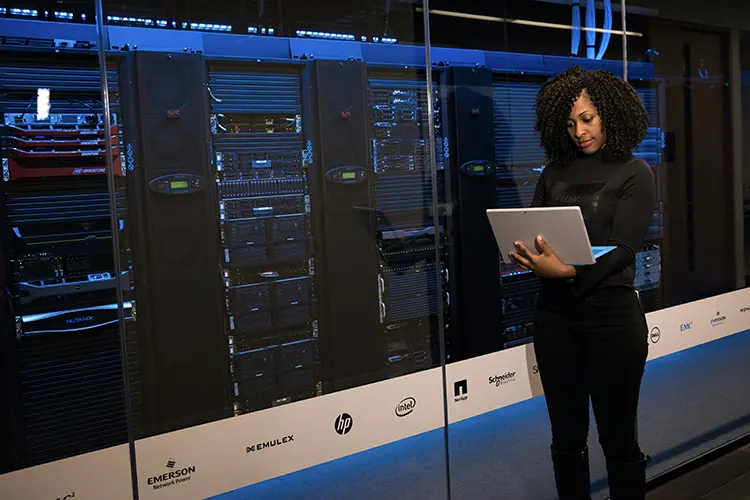
Network segmentation, hardening and audited firmware are already part of technical specifications in corporate AV projects.
Security is no longer an add-on but is becoming an access criterion for integrators.
The transformation of the audiovisual sector towards fully IP-based architectures is forcing a rethink of AV system design within organisations’ digital infrastructures. Systems that for years were relatively isolated have now become connected devices sharing networks with corporate platforms, security systems, cloud applications and collaboration tools.
This shift has introduced a new factor in project design: cybersecurity applied to audiovisual infrastructures. Increasingly, organisations consider AV systems as part of their digital risk surface, leading to security requirements being directly incorporated into integration specifications.
As a result, the role of the integrator is also evolving. It is no longer just about deploying efficient video, audio or control systems, but about ensuring that these devices do not compromise the security of the corporate network in which they operate.
AV network segmentation: a new reference architecture
One of the most visible changes in recent projects is the adoption of network segmentation for audiovisual systems. Instead of sharing the main corporate network, AV devices are increasingly deployed in dedicated VLANs or segmented networks, limiting their access to the rest of the IT infrastructure.
This approach reduces risks in case of vulnerabilities in connected devices and prevents AV systems from becoming entry points to other critical areas of the network.
Segmentation is becoming standard practice in projects such as:
- Corporate headquarters
- Business campuses
- Conference centres
- Government facilities
- Critical infrastructures
In many of these projects, AV network design is carried out in close collaboration with network architects and corporate cybersecurity teams.
Audiovisual endpoints under security policies
The second major front in AV security lies in network-connected endpoints. Smart displays, DSP processors, IP cameras, control systems, media players or digital signage platforms are למעשה computing devices with their own firmware, open ports and active network services. If not properly managed, these devices can become vulnerabilities within the digital infrastructure.
As a result, projects are increasingly requiring AV endpoint hardening processes, including security configurations prior to system deployment, such as:
- Removal of default credentials
- Disabling unnecessary services
- Remote access control
- Firmware update policies
- Integration with network monitoring systems
These practices, common in the IT world, are progressively being adopted in the audiovisual domain as convergence between both sectors accelerates.
Audited firmware and embedded software control
Another element gaining relevance is the auditing of firmware in audiovisual devices.
Organisations are demanding greater transparency regarding the origin of embedded software, update processes and vulnerability management. In response, some manufacturers are incorporating more advanced security mechanisms, such as:
- Digitally signed firmware
- Verified updates
- Version control and traceability
- Vulnerability disclosure programmes
 These measures help improve technological trust in devices that, in many cases, remain connected to the network for years.
Pressure from cybersecurity insurance policies
A key driver accelerating this shift is the insurance sector. Corporate cybersecurity policies increasingly include requirements related to the management of network-connected devices.
This means that audiovisual systems are becoming part of the inventory of technological assets that must comply with specific security policies.
In some cases, IT departments require detailed documentation on network architecture, firmware updates or remote access policies before approving the integration of an AV system within the corporate infrastructure.
The integrator profile is evolving
The convergence between AV and IT is redefining the role of the audiovisual integrator. In large-scale projects, integrators no longer work solely with audio and visual technologies, but must collaborate with network architects, cybersecurity managers and digital infrastructure teams. This implies new technical capabilities in areas such as:
- Segmented network design
- Secure management of connected devices
- Alignment with corporate security policies
- Integration within complex IT infrastructures
For many organisations, the AV system is no longer an independent element of the building, but a core component of the corporate digital infrastructure.
Security becomes an access requirement
The audiovisual industry has undergone major transformations in recent decades, from the transition to IP to convergence with the IT world. Cybersecurity applied to AV systems is now emerging as the next major structural shift in the sector.
In this new landscape, more and more projects are incorporating security requirements from the design phase. This is leading to an increasingly widespread conclusion among consultants and technology leaders: integrators who do not incorporate cybersecurity capabilities will struggle to access large-scale audiovisual infrastructure projects in the coming years. Security is no longer an add-on in AV integration—it is part of the system itself.