








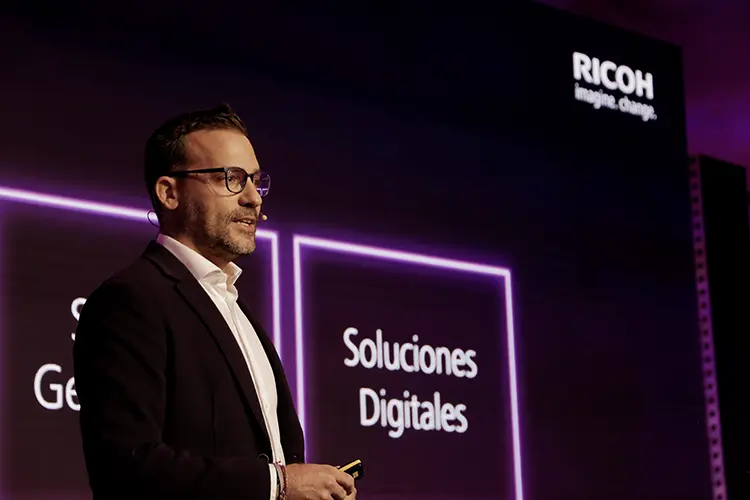
Ricoh Spain has focused the tenth edition of its Be Hybrid.
Be Smart event on the key trends that will shape the evolution of the digital workplace in 2026 and the years ahead, in order to take advantage of the new wave of innovation driven by artificial intelligence and hybrid collaboration models.
We are facing a unique opportunity to redesign the work experience. Companies that know how to integrate AI, automation, and intelligent collaborative spaces will be the ones leading the next stage of digital growth, stated José Luis Gión, Director of the Digital Workplace area at Ricoh Spain.
According to the executive, the end of support for Windows 10, together with the rapid expansion of artificial intelligence, marks a critical moment for the technological modernisation of the workplace.
Companies will need to address the renewal of their technology equipment by incorporating devices with AI-optimised processing capabilities, strengthening security and regulatory compliance, and avoiding unforeseen costs derived from technological obsolescence. “They will need an internal assessment of their PC and laptop equipment to determine whether they have the right devices for their current scenario and whether they are acquiring the appropriate equipment that will still be valid three years from now, when AI is fully widespread”, noted Gión.
Another of the clearest trends in a hybrid work model is the evolution towards more collaborative spaces that are attractive to employees, benefiting the business while also helping to attract and retain talent.
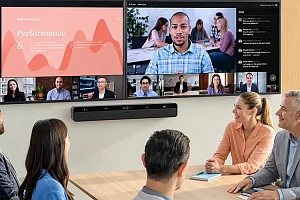
Complex, multi-purpose, and flexible meeting rooms are now more immersive, and with the emergence of AI, automation, and collaboration tools such as Microsoft Copilot for Teams, they have enabled improved user experiences. According to the Ricoh expert, there is a clear trend indicating that these spaces will continue to improve. However, small and standard meeting rooms, which were equipped between 2020 and 2022, now feature technology that is largely obsolete. On a positive note, “the evolution of technology has led us to much more mature, affordable, and powerful solutions today, making hybrid work far simpler, more agile, and more secure”, he emphasised.
On the other hand, digital solutions are the lever for intelligent information management and for using data as a strategic asset. Companies will need to integrate solutions that improve the digital experience, ensure real-time access to knowledge, and transform dispersed information into structured, actionable intelligence for decision-making.
Managed services and proactive support: AI as an ally of DEX
The digital employee experience (DEX) will be one of the main indicators of competitiveness in 2026.
According to Ricoh, AI will also transform the way IT services and remote support are managed, automating unattended tasks and anticipating incidents before they impact users. The new managed services will therefore free up time for internal teams and improve operational efficiency.
The experience of OHLA and Carrefour
OHLA and Carrefour are two major companies leading the transformation of workplaces in the era of hybrid work and embracing artificial intelligence to innovate. Nuria Fuentes, Global CIO & Digital Transformation Officer at OHLA, and Javier Mallo, CIO of Carrefour, are driving these transformations by enabling open spaces that foster innovation, deploying technology that facilitates inclusive meetings for both on-site and remote employees, and integrating AI into employees’ tasks and corporate processes.
According to OHLA’s IT executive, to succeed in the democratisation of AI within the company, it is essential to have a governance model and a strategy that enable productivity improvement as well as process optimisation and automation. AI is helping us identify those products or services that can be truly differentiating.
For his part, Javier Mallo highlighted that for Carrefour it was also decisive to “identify 100 profiles from different departments who stand out for their dynamism and digital skills, train and empower them to drive AI adoption among their colleagues, and share use cases through workshops. Soon, AI agents will work hand in hand with people, and we must reinforce three basic principles: security, governance, and privacy”.
The future of the workplace, at Be Hybrid. Be Smart
The new digital, hybrid, and connected environment represents an unprecedented opportunity to boost productivity, attract talent, and strengthen corporate security. Ricoh proposes a strategy centred on people to create more human, secure, and sustainable work environments, where technology empowers people rather than the other way around.
The tenth edition of Be Hybrid, Be Smart has confirmed its position as the key meeting point for understanding how hybrid work, the smart workplace, and technological integration in organisations are evolving.
A forum that brings together those leading transformation within their companies, manufacturers setting the pace with innovative services and solutions, and Ricoh as a global integrator, with nearly nine decades of transforming the way people work and ten years of developing collaborative experiences tailored to each customer.