











Audio quality in conference rooms has become a critical priority for businesses.
An emerging trend in the design of these spaces is the use of microphone polar patterns, a technology that promises to revolutionize the way voices are captured and transmitted in collaborative work environments.
Microphone Polar Patterns
Microphone polar patterns describe how these devices pick up sound from different directions. There are several types, including omnidirectional, cardioid, supercardioid, and bidirectional, each with unique characteristics that make them suitable for different applications.
In the context of conference rooms, choosing the right polar pattern can significantly enhance clarity and quality of the audio, eliminating unwanted noise and focusing on capturing participants' voices.
- Omnidirectional: Captures sound uniformly from all directions.
- Cardioid: Primarily captures sound coming from the front, with some sensitivity to the sides.
- Supercardioid: More directional than cardioid, with greater ability to isolate ambient noise.
- Bidirectional: Captures sound from two opposite directions, ideal for interviews or face-to-face debates.
Applications in Conference Room Design
- Omnidirectional for Large Spaces: Omnidirectional microphones are ideal for large conference rooms with multiple dispersed participants. Their ability to pick up sound from all directions ensures that voices are heard clearly, regardless of the speaker's location. This type of microphone is perfect for meetings where participants are scattered around the room and it is essential to capture voices evenly.
- Cardioid for Voice Focusing: In smaller meetings or when the focus needs to be on a single speaker, cardioid microphones are the preferred choice. These microphones capture sound coming from the front, reducing ambient noise and improving speech clarity. They are useful in situations where it is crucial for the main speaker's voice to be clear and free of interference.
- Supercardioid and Bidirectional for Specific Situations: Supercardioid and bidirectional microphones are useful in settings where greater directionality is needed. Supercardioid microphones excel at further reducing lateral and rear noise, while bidirectional microphones are useful in debates or interviews where two people sit opposite each other. This allows for precise voice capture of the interlocutors, avoiding background noises that could interfere with communication.
Additional Benefits
The strategic use of polar patterns in conference room design not only improves audio quality but also facilitates integration with video conferencing systems and other collaborative technologies. It also contributes to a more intuitive user experience, where participants can speak freely without worrying about proximity to the microphone or the need for additional devices.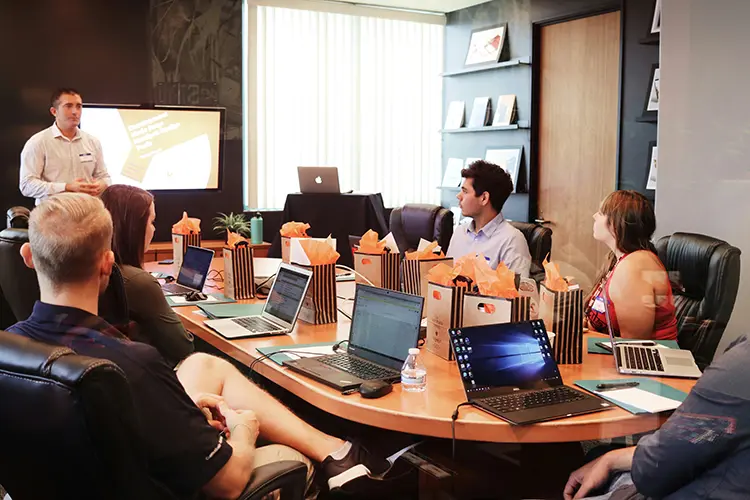
- Technological Integration: The correct application of polar patterns allows for smooth integration with video conferencing systems such as Zoom, Microsoft Teams, or Google Meet. This ensures that participants, whether local or remote, can communicate effectively without loss of audio quality.
- Reduction of Ambient Noise: By selecting the appropriate polar pattern, it is possible to minimize the impact of ambient noise, such as air conditioning, keyboards, or distant conversations, providing a more professional and less distracting environment for attendees.
- Flexibility in Room Design: Using microphones with different polar patterns allows for greater flexibility in room design. For example, spaces can be configured to accommodate both large meetings and small work teams without the need to change equipment.
- Improved User Experience: A well-designed conference room using microphones optimized for different situations improves the user experience, allowing participants to focus on the discussion without worrying about technical issues.
Implementation
Several companies are already implementing this technology with notable results. For example, the technology multinational XYZ has redesigned its conference rooms using a combination of cardioid and omnidirectional microphones, achieving clearer and more effective communication in its global meetings. According to a company spokesperson, "adapting polar patterns has allowed for greater flexibility and has significantly improved the quality of our video conferences".
Another example is the consulting firm ABC, which has integrated supercardioid microphones into its meeting rooms for confidential projects, where privacy and communication clarity are crucial. This change has resulted in a noticeable decrease in interruptions and increased efficiency in meetings.
Future of Polar Patterns in Conference Rooms
With the continuous advancement of technology, adaptive polar pattern microphones are starting to emerge in the market. These devices can automatically change their polar pattern based on the number of people in the room and their location, offering a more versatile and effective solution.
Research and development in this field promise to continue innovating, with the possibility of smart microphones that not only capture sound more precisely but also integrate with artificial intelligence systems to improve user experience and real-time communication management.
In summary, the application of microphone polar patterns in conference room design represents a significant evolution in the architecture of collaborative spaces, offering innovative solutions to the challenges of modern communication. With this technology, companies can ensure that every voice is heard with maximum clarity, promoting more effective and productive collaboration.