














AI, sensors and data are turning digital signage into an intelligent platform.
For years, digital signage was dominated by a simple logic: screens connected to a CMS playing scheduled content in a continuous loop. Technological innovation in the sector focused primarily on hardware — higher brightness, greater resolution, ultra-wide formats and more visually impactful displays — as well as the expansion of signage networks across retail, corporate environments and DOOH.
The shift now taking shape across the industry has less to do with the screen itself and more with the ability to transform every display into a point of data, interaction and decision-making.
One of the trends that became evident at DSS Europe Munich 2026 was the evolution towards architectures that integrate sensors, edge AI, contextual automation and analytics directly into digital signage. This approach is transforming the screen into part of a connected infrastructure capable of measuring audiences, detecting behaviours, adapting content and monetising physical spaces.
 |
 |
The value no longer lies in the content being displayed, but in the ability to measure engagement, generate operational data and automate decisions in real time.
Physical retail begins to operate like a digital media channel
The expansion of retail media is accelerating this transformation. Retailers want to bring into physical environments capabilities that are already standard in digital advertising ecosystems: contextual targeting, reporting, attribution, campaign automation and traffic monetisation. This is also reshaping the role of in-store digital signage. Screens are no longer just promotional tools; they are becoming connected advertising inventory.
In this context, companies such as Dimedis are directing part of their strategy towards platforms capable of combining digital signage, centralised management and operational automation for retail and corporate signage. Its kompas ecosystem is built around the convergence of dynamic content, multi-location management and connected operations.
The growing demand for verifiable metrics is turning concepts such as proof-of-play into critical elements for retailers and advertisers. Simply running campaigns is no longer enough: the market increasingly requires playback validation, traceability and measurable operational impact.
Meanwhile, M-Cube has spent years developing omnichannel architectures for international retail environments where digital signage, audio, customer experience and brand activation operate as a unified infrastructure. This reflects how signage is increasingly being integrated into broader first-party data and retail media strategies. The underlying logic is clear: physical retail wants to operate with measurement and monetisation capabilities comparable to those of digital environments.
Sensors, RFID and LiDAR: the new operational layer of digital signage
Much of this transformation depends on the integration of sensors and contextual interaction systems.
One of the most representative players in this field is Nexmosphere, whose proposition is built around a modular sensor architecture specifically designed for interactive digital signage and retail experience applications.
Its ecosystem combines sensing, identification and spatial analytics technologies, incorporating RFID, NFC, proximity and presence sensors, computer vision, gesture recognition and LiDAR solutions. The key value lies not only in enabling interactive experiences but also in transforming physical interactions into operational data that retailers and brands can use.
One of the most widespread examples is the Lift & Learn model, where RFID sensors detect when a customer picks up a product and automatically trigger contextual content on-screen. These solutions have expanded across sectors such as consumer electronics, luxury retail, cosmetics and automotive because they measure actual product interaction rather than simply screen traffic.
Nexmosphere is also advancing LiDAR-based applications such as the XQ-L2, designed to create virtual spatial detection zones capable of triggering experiences based on user movement and position. This approach is particularly relevant in Europe because it enables contextual detection without capturing identifiable images, an increasingly important requirement under GDPR regulations.
The implication for the sector is significant: digital signage is beginning to incorporate a permanent sensory layer designed to measure and respond to the physical environment.
From playback to audience analytics
Another structural shift in the sector is the move from basic playback metrics towards audience analytics and contextual behaviour models.
 99sensors is focusing much of its strategy on the convergence of edge AI, sensors and analytics applied to the point of sale. Through its Signage Pilot platform, the company transforms digital signage into a data source capable of measuring attention, interaction, traffic and spatial behaviour. The result is an approach increasingly aligned with digital analytics, where the screen evolves from a simple visual medium into a tool capable of evaluating content performance and its impact on commercial activity.
This development is particularly relevant because it connects directly with the evolution of retail media. Brands are no longer seeking only physical presence in-store; they want verifiable metrics and optimisation capabilities comparable to those available in digital advertising.
CMS platforms evolve towards contextual automation
Artificial intelligence is accelerating this transformation even further.
Companies such as OptiSigns are incorporating Audience Intelligence tools based on cameras and AI to detect screen exposure and enable contextual segmentation using aggregated demographic data.
The platform can dynamically activate content according to variables such as time of day, visitor flow, sensor data or automated rules connected to operational and commercial systems.
This approach is also transforming the traditional role of the CMS. Content management systems are no longer simple playlist repositories; they are evolving into platforms capable of reacting automatically to physical context and environmental conditions.
Similarly, NoviSign is strengthening its enterprise capabilities through features focused on automation, API integration, remote management and centralised control of distributed networks, while also incorporating advanced monitoring and playback validation tools. This evolution responds directly to the growth of DOOH and retail media networks, where operational traceability and automation are becoming essential.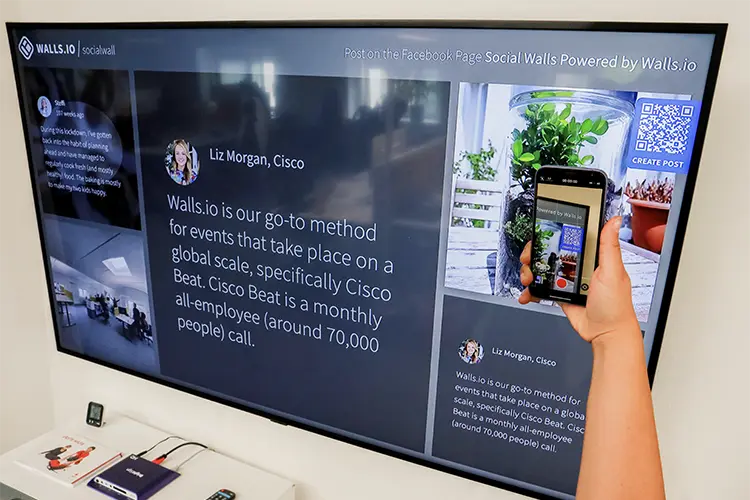 Content is therefore becoming dynamic. Screens no longer simply play scheduled campaigns; they increasingly react to traffic patterns, context, product availability and estimated audience behaviour.
Spatial interaction and immersive experiences
Another area that gained momentum at DSS Europe Munich 2026 was touchless interaction and experiential signage.
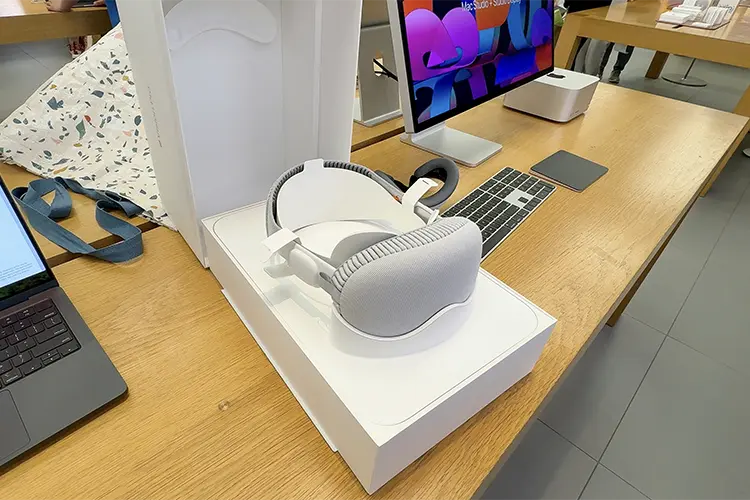
AMERIA has specialised for years in gesture-based interaction technologies for retail and immersive experiences. Some of its developments with Sony use Spatial Reality Display technology and Intel RealSense sensors to create interactive 3D experiences without traditional touch interfaces.
The appeal of these solutions goes beyond visual impact. They also respond to the growing need for physical differentiation from e-commerce and the search for higher levels of in-store engagement. Interaction is evolving from touch-based interfaces towards models based on spatial recognition and gesture control.
 |
 |
Avatars, conversational AI and intelligent signage
Generative AI is also beginning to enter the digital signage ecosystem.
Pantheon Lab is positioning itself in the development of digital humans and virtual assistants for retail, hospitality and customer experience environments. The combination of generative avatars, natural language processing and digital signage points towards models where screens evolve from one-way communication channels into conversational interfaces.
Rather than replacing human staff, these solutions aim to extend customer service, personalisation and interaction capabilities within physical spaces.
Privacy, edge AI and data governance
 The smarter screens become, the more important data handling becomes. The expansion of sensors, audience analytics and computer vision inevitably raises questions around privacy, surveillance and the governance of contextual information.
Many companies in the sector emphasise anonymisation and aggregated data approaches to avoid individual identification. European regulations are also driving architectures based on edge AI and local processing in order to minimise the transfer of sensitive information to the cloud.
This approach is becoming increasingly relevant in retail media and audience analytics deployments across public and regulated environments.
The discussion is therefore shifting from technological capability towards operational trust:
- what data is collected,
- where it is processed,
- who controls it,
- and how it can be used within retail media and customer analytics strategies.
The new role of AV integrators and technology providers
All of this is also redefining the role of AV integrators. Deploying screens and media players is no longer enough. The growing incorporation of sensors, APIs, automation tools, edge computing, audience analytics and retail media platforms is forcing the industry to develop new capabilities related to technology integration, data management and cybersecurity.
AV integrators are increasingly taking on roles closer to technology consulting, systems integration and connected operations. The screen is no longer an isolated device but part of a measurable, manageable and interconnected infrastructure.
And that is perhaps one of the key conclusions from DSS Europe Munich 2026: the future of digital signage will depend less on the display itself and more on the ability to transform physical spaces into intelligent, automated and operationally measurable environments.