















History has shown us that innovation often emerges during the most challenging times.
Military technology, originally designed for defense and security, has been a key driver in the development of breakthroughs that are now an essential part of our everyday life.
Advances in defense have led to innovations that are now indispensable. From the International Defense and Security Fair of Spain (FEINDEF), a leading event where the latest technological developments in the sector are showcased, we explore some of the technologies born in the military field that have transcended the battlefield to become part of our daily routines, redefining how we live and communicate.
The technology that changed the course of World War II
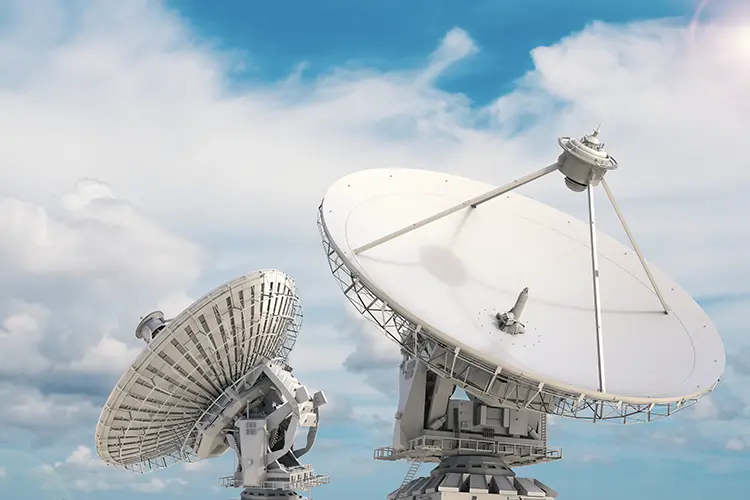
Radar, as we know it today, was created in the 1930s and developed in England during World War II by physicist Robert Watson-Watt. Its invention was almost accidental, when Watson-Watt and his assistant were investigating a possible weapon of war: a “death ray” capable of disabling enemy pilots by raising their body temperature.
Although the theoretical groundwork already existed, he and his team turned it into a functional system for detecting aircraft using radio waves. In 1935, Watson-Watt successfully demonstrated it by detecting an airplane several kilometers away.
This innovation was crucial in giving the Royal Air Force a decisive advantage in the Battle of Britain and, over time, it became the basis for civilian applications such as air traffic control and meteorology.
The Cold War of networks
The hyperconnected world in which we live has its origin in a military project. During the Cold War, the U.S. government created ARPANET, a decentralized computer network capable of withstanding nuclear attacks and allowing communication between military bases and research centers.
This system evolved into what we now know as the Internet. Over time, it ceased to be solely a military tool and gave way to the network that connects billions of people worldwide. From e-commerce to remote and cloud-based work, social media, or streaming, the Internet has transformed the way we live, work, and interact.
The compass that moves the world
The Global Positioning System (GPS) was developed by the U.S. Department of Defense in the 1970s to improve the navigation of troops, ships, and missiles. Initially restricted to military operations, it became publicly available in the 1990s.
Today, GPS is essential for vehicle navigation, aviation, freight tracking, and even fitness applications we use for running or cycling. Without this invention, logistics, transportation, and urban mobility would be very different from what we know.
The revolution conquering the skies
Originally designed for reconnaissance, surveillance, and attack missions in conflict zones, drones have evolved into indispensable tools in numerous industries.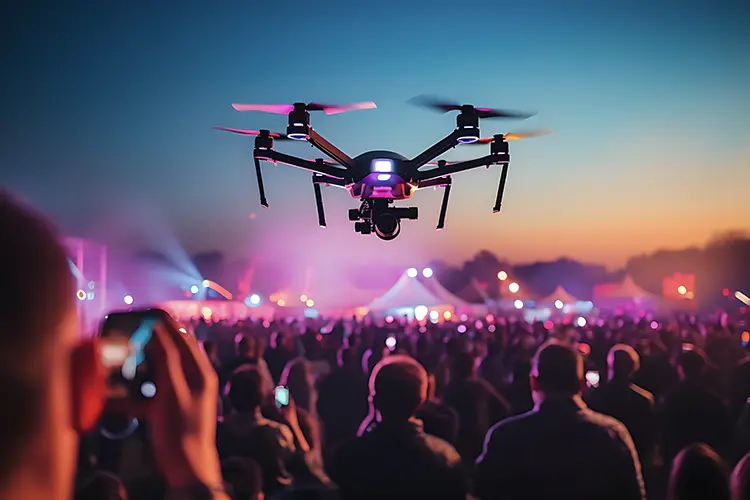 Nowadays, these unmanned aircraft are used in sectors such as defense, film, logistics, and agriculture. Some companies are exploring their use for package delivery, while in the security field they are employed for the surveillance of critical infrastructures and emergency management.
The anesthesia that alleviates pain and gives life
What is now an indispensable technique in maternity wards worldwide had its origin in the military field. Epidural anesthesia, used to relieve pain during childbirth and in various medical procedures, began to develop in the 19th century, but it was within the context of wartime medicine that its use became especially relevant. During armed conflicts, military doctors sought effective ways to mitigate the suffering of wounded soldiers without compromising their immediate responsiveness.
This need drove advances in the administration of local anesthesia, refining the techniques we know today. Over time, epidurals went beyond the battlefield and became a standard in hospitals around the world. What began as a solution for treating combat casualties is now a key resource for improving the quality of life for millions of people in medical and surgical procedures.
FEINDEF 25
The upcoming edition of the International Defense and Security Fair of Spain (FEINDEF), taking place from May 12 to 14 at IFEMA (Madrid), will be a key showcase where the defense industry will present its latest advances and innovations. Many of them not only redefine security and military strategy, but also find applications in the civilian sphere, driving technological progress across multiple sectors.