













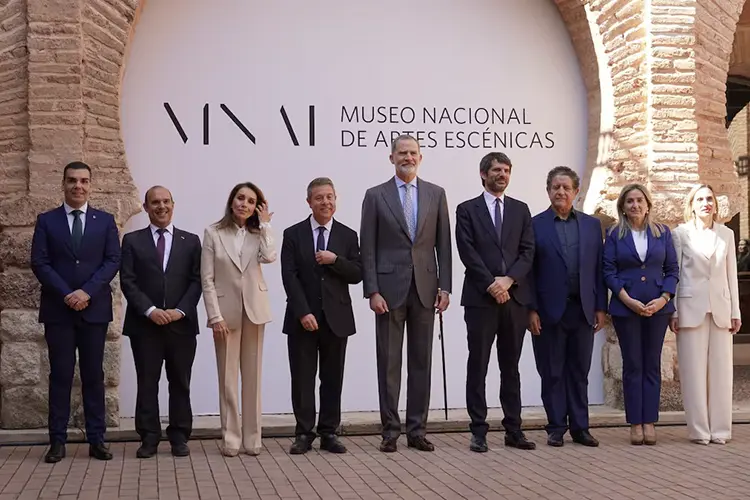
His Majesty King Felipe VI has inaugurated the MNAE (National Museum of Performing Arts) on World Theatre Day.
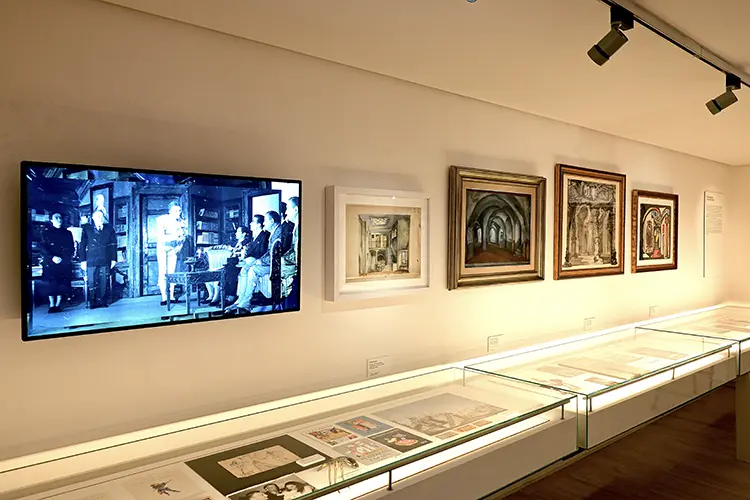
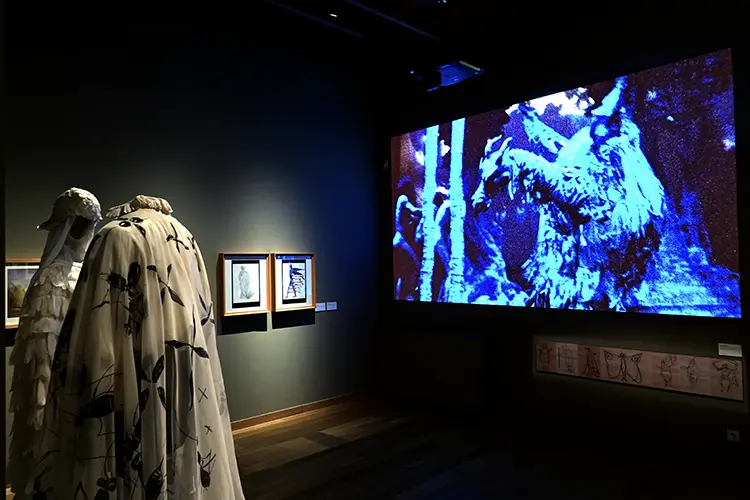
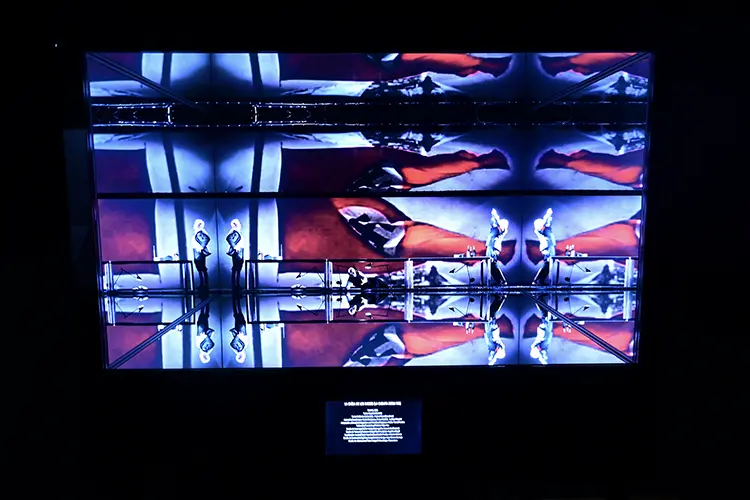
The tour of this museum offers an experience that is both immersive and analog. Standout elements include a large front LED screen by HIKVISION (6.5 x 2.5 m), immersive rooms with 90 m² of EPSON projection, videomapping on the vault using PANASONIC technology, LG displays of 43" and 49", multichannel distributed sound by BOSE, and an exhibition curated by Ángel Martínez —project curator— featuring a selection of 17,500 pieces from the 16th century.
These pieces are presented in an innovative concept of display and furniture designed specifically for this project by our HDFaber team.
 |
 |
The museum offers a reverse chronological tour: it begins in the 21st century and goes back to the Auto de los Reyes Magos (10th century), passing through key periods such as the Transition, the Civil War, Romanticism, and the Baroque. The ground floor is dedicated to independent theatre and Spanish festivals, while the upper floor is organized around the four natural elements as a scenic axis.
This audiovisual museography and integration project is located in the Palaces of the Maestres de Calatrava, a historic 13th‑century building with 2,213 m² distributed over three floors. It is situated in the city of Almagro (Ciudad Real), recognized as a Historical‑Artistic Complex. The museum is directed by Beatriz Patiño.
The architectural renovation of the MNAE was carried out by architects Jesús Donaire and María Milans del Bosch. The content was developed by audiovisual creator Álvaro de Luna; the musical piece is by composer Luis Miguel Cobo; the design of the scenic machinery is by Miguel Ángel Coso; and the lighting was created by Juan Gómez Cornejo, National Theatre Award and Gold Medal for Merit in Fine Arts.
 |
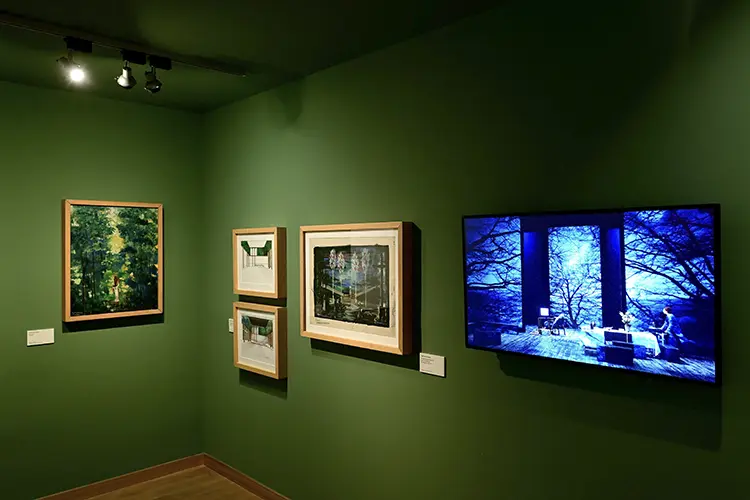 |
The MNAE establishes itself as the largest Spanish center of performing arts heritage, with five centuries of theatrical history brought together under one roof. It combines technological innovation and historical rigor, housing unique pieces such as Salvador Dalí’s sketches for Don Juan Tenorio, the iconic blouse and ankle boots of Miguel de Molina, scenic watercolors by Giorgio Busato, a Medea costume designed by Jesús del Pozo, the pictorial collection of Victorina Durán, and the impressive painting El bufón del rey by Germán Álvarez Algeciras.